|
|
|
Dear ,
This newsletter was on pause for a while. To make up for it, we feature a conversation with United Disabled Persons of Kenya (UDPK).
One of the greatest privileges of my role as Senior Expert for Economic Empowerment at Light for the World is seeing the power of partnerships in action. Across countries and sectors, we work with Organisations of Persons with Disabilities (OPDs), governments, employers, financial institutions and communities, who are all united by a common goal: creating economic opportunities that leave no one behind.
This edition is a celebration of those partnerships.
Our conversation with the United Disabled Persons of Kenya (UDPK) remind us that the most effective partnerships are built on more than shared projects. They are built on trust, mutual respect and a willingness to listen. One message, in particular, stood out:
"Don't design programmes for us. Design them with us."
It is a simple statement, but one that reflects a growing conversation across the development sector. As the OECD's recent Practical Guidelines for Supporting Locally Led Development highlights, localisation is not simply about funding local organisations, it's about sharing leadership, decision-making and accountability through equitable partnerships.
At Light for the World, we believe lasting change is created when technical expertise and lived experience come together. I hope the stories, reflections and information on new publications, upcoming events, training and funding opportunities in this edition inspire you to think about partnerships not simply as a way of delivering projects, but as a catalyst for creating stronger systems, organisations and more inclusive economies.
Thank you for being part of this journey.
Faustina Ning'a Cikanda
Senior Expert Economic Empowerment |
|
|
|
|
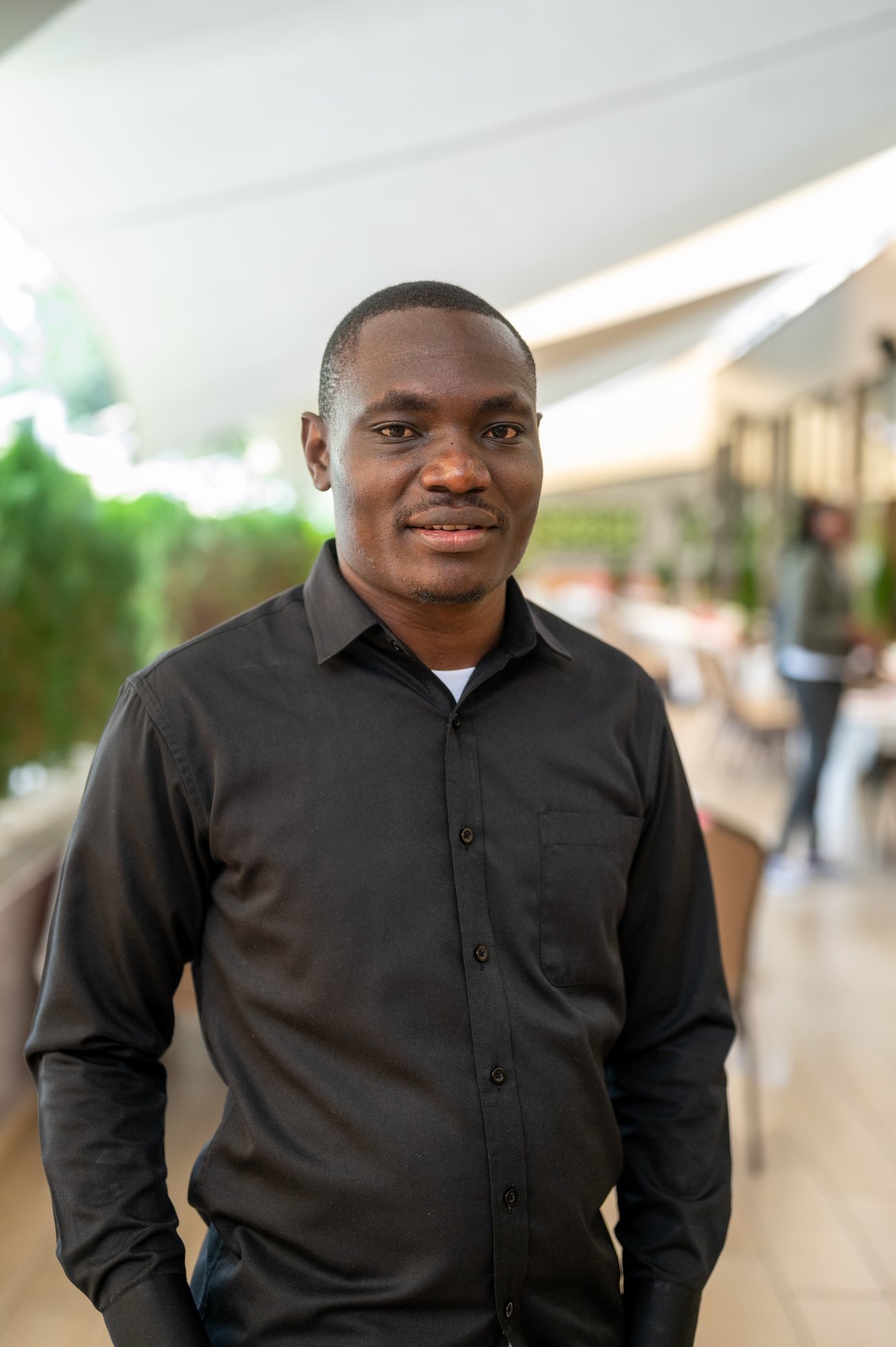
What real partnership looks like: a conversation with Emmanuel Makokha of UDPK
|
|
By Faustina Ning'a Cikanda
“If you ask me, economic empowerment isn't just about money,” says Emmanuel.
“It's about being able to participate.”
We had intended this to be a straightforward conversation about the partnership between the United Disabled Persons of Kenya (UDPK) and Light for the World.
Instead, it became a discussion about power, dignity, stereotypes, human-centred design and why the best partnerships don't start with projects, they start with people.
I ask Emmanuel why economic empowerment has become such an important part of UDPK's work.
He doesn't begin with employment statistics. Or poverty. Or policy.
Instead, he starts with the G7.
“Richard Mativu shared something that has stayed with me,” he says. “He said there are some spaces where you simply cannot participate meaningfully unless you're economically empowered.
“Think about the G7. Not every country is invited to that table. Economic influence matters.
“The same thing happens to people.”
The comparison catches me off guard.
He's not talking about wealth. He's talking about voice and agency.
“When people have livelihoods, when they have businesses, when they are economically empowered, they don't just survive. They participate.”
The answer I wasn't expecting. I ask him what the biggest barrier is. Finance? Education? Access to markets?
He shakes his head and says “attitude”.
Just one word.
“Society has spent years telling persons with disabilities what they cannot do,” Emmanuel says. “If you've heard that long enough... you begin believing it yourself.”
That's where internalised stigma begins, he explains. The barriers aren't only external. Sometimes they slowly move internally too. And if we handle the inside really well, then the outside (policies, infrastructure and systems) will align. Inclusion will be inborn.
I ask him what has kept UDPK and Light for the World together for so many years.
“Who cooks?” I ask.
He laughs and says “both of us”.
Then, almost immediately, he becomes serious.
“Light for the World brings technical expertise. We bring lived experience. Neither is enough on its own.”
Development loves phrases like meaningful participation. So, I ask him what it actually means.
He doesn't hesitate and says “don't make us a tick box”.
He explains that meaningful participation means being present before the proposal is written. During implementation, during monitoring and during learning.
“Human-centred design teaches us something important,” he says. “You don't design programmes and products for people. You design them with them.”
There it is. The sentence that probably sums up our entire conversation.
I ask him a question that most partners would probably avoid, “can we do better?”.
He doesn't defend the partnership. He doesn't pretend everything is perfect.
He smiles and says “life is a journey. Inclusion is a journey. We are not there yet”.
Then he says something I'll remember long after this conversation.
“Recognising that we still have gaps and blind spots is already a big first step.”
Perhaps that's what real partnership looks like. Not two organisations claiming to have all the answers. But two organisations willing to keep learning together.
Finally, in one sentence what does economic empowerment mean to you?
There’s a political slogan that flies around during campaign seasons, “pesa mfukoni” literally translating to “money in the pocket.” On the outside, this is economic empowerment. On the inside, economic empowerment is freedom – freedom to make choices and participate. |
About UDPK |
|
United Disabled Persons of Kenya (UDPK) is the national umbrella of OPDs in Kenya. UDPK brings together more than 200 OPDs and links the national disability movement to regional and global platforms through its membership of the African Disability Forum (ADF) and the International Disability Alliance (IDA). |
About Emmanuel Makokha |
|
|
|
Emmanuel Makokha is a disability inclusion, youth engagement and community development professional experienced in advancing sustainable development across Sub-Saharan Africa. An agronomist by training, certified Disability Inclusion Facilitator and programme growth practitioner, he specialises in designing and implementing inclusive strategies that empower marginalised communities through capacity development, stakeholder engagement and community-led development. Emmanuel is a strong advocate for the meaningful participation of youth and persons with disabilities in decision-making processes and currently serves on the Mastercard Foundation Youth Advisory Board, providing strategic insights on inclusive communication. He also contributes to the UN Joint Program on Youth Employment and Skills Development Youth Steering and Engagement Committee (YSEC) and recently became an advisory board member at Champions for SDGs Youth. A champion of SDG 2 (Zero Hunger) and SDG 8 (Decent Work and Economic Growth), Emmanuel is committed to advancing food security, economic inclusion and sustainable livelihoods, while ensuring no one is left behind. |
|
|
|
|
Practical Guidelines for Supporting Locally Led Development |
|
|
|
Localisation is more than funding local organisations, it is about sharing power.
The new OECD publication “Practical Guidelines for Supporting Locally Led Development” offers one of the clearest roadmaps yet for what genuine localisation should look like in development cooperation. The publication argues that locally led development is not simply about increasing funding to local organisations. Instead, it calls for a fundamental shift in how partnerships are designed, moving decision-making, leadership and accountability closer to the people and organisations most affected by development challenges.
To make this happen, the OECD highlights several practical areas for action: |
|
|
-
Co-create solutions with local actors from the earliest stages of programme design and not after decisions have already been made.
-
Build equitable partnerships based on mutual trust, shared learning and long-term relationships, rather than transactional contracts.
-
Provide quality financing that is flexible, predictable and supports institutional strengthening, not just project delivery.
-
Simplify due diligence and compliance processes so that risk is shared more fairly and local organisations are not disproportionately burdened by administrative requirements.
-
Reimagine the role of international organisations from implementers to facilitators, conveners and technical partners that strengthen local leadership.
|
|
|
|
|
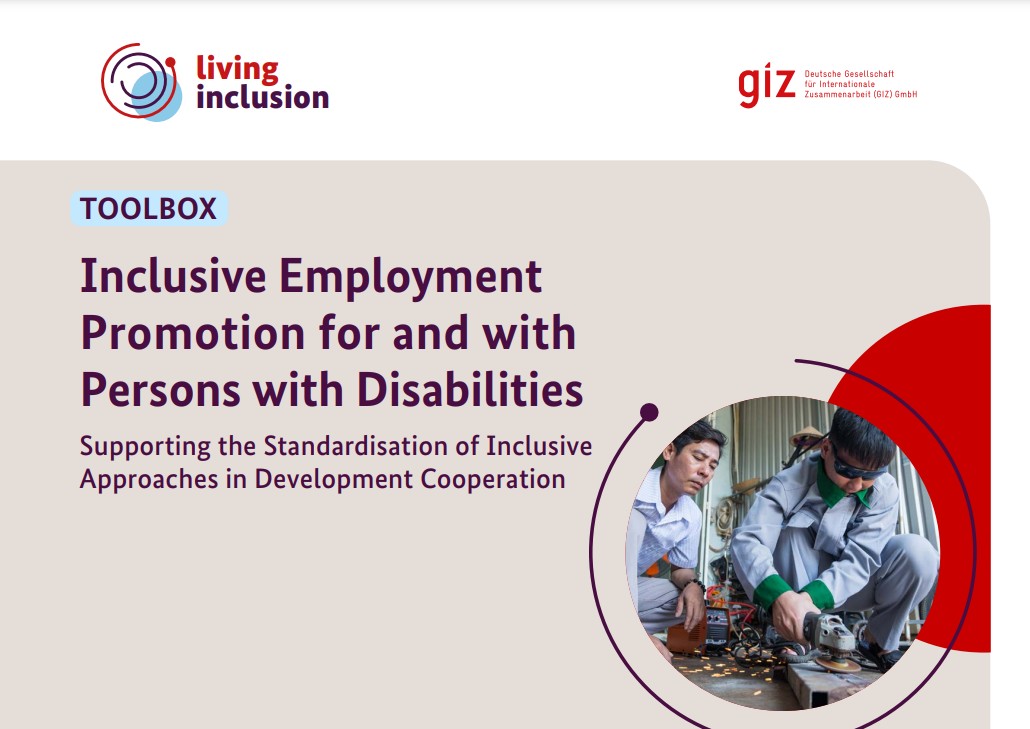
Toolbox on Inclusive Employment Promotion for and with Persons with Disabilities |
|
|
|
|
|
|
8 October 2026: World Sight Day |
|
|
|
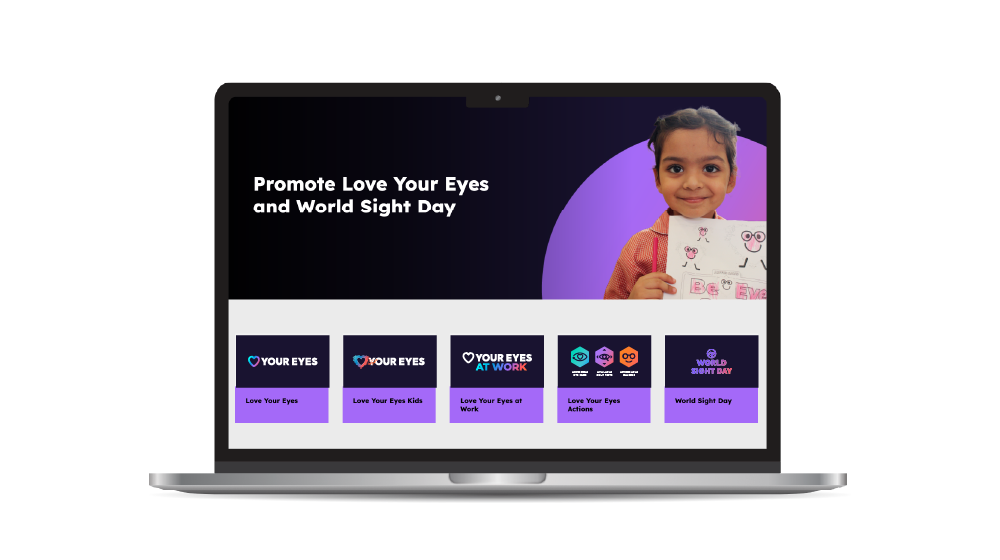
On World Sight Day, the International Agency of Prevention of Blindness (IAPB) casts a spotlight on the importance of eye care and encourages everyone to #LoveYourEyes. On the World Sight Day website you find various ways to engage. You can: |
|
|
9 to 20 November 2026: COP 31
This year’s UN Climate Change Conference will happen from 9 to 20 November in Antalya, Turkey.
If you are interested in Disability Inclusive Climate Action and are not yet part of the formally recognised Disability Caucus, you can register here to stay up-to-date with monthly meetings and join the movement. The Disability Caucus brings together persons with disabilities and OPDs as rights-holders. They has recommended to apply to the Youth Negotiator Academy here, to ensure youth with disabilities are represented. |
|
|
|
|
Institute of Development Studies: Pathways to Sustainability
Looking to deepen your understanding of sustainability beyond technical solutions? The Institute of Development Studies (IDS) offers a free, self-paced online course: Pathways to Sustainability.
The course examines sustainability through a critical lens, exploring how social and environmental challenges are shaped by diverse perspectives, values and power dynamics. Participants will learn theories and methods that help uncover alternative pathways to sustainability and challenge dominant narratives in research and practice.
Ideal for professionals, researchers and anyone interested in equitable and inclusive approaches to sustainability, this course provides practical tools to better understand and support diverse solutions to global challenges.
International Disability Alliance (IDA) offering Online Courses
International Disability Alliance (IDA) is offering two new online courses through the IDA Online Learning Academy:
1. CRPD A to Z
The CRPD A to Z course is an introduction to the core articles (Articles 3–33) of the Convention on the Rights of Persons with Disabilities (CRPD). These articles outline the rights of persons with disabilities and the responsibilities of governments to protect, promote and fulfil those rights.
Designed for both newcomers and those looking to deepen their knowledge, the course provides a clear understanding of how the CRPD articles are interpreted and applied in practice. Participants can learn at their own pace while exploring the jurisprudence, interpretation and real-world implementation of disability rights.
To enrol, please register here: CRPD A to Z.
2. Strengthening Financial Systems: A Practical Course for OPDs
This new course is designed to help Organisations of Persons with Disabilities (OPDs) strengthen their financial capacity and organisational sustainability.
Across four modules, participants will explore:
-
Why financial literacy matters for OPDs
-
Key financial concepts and terminology
-
Internal financial systems
-
External financial systems
Going beyond traditional financial management, the course demonstrates how improved financial literacy can support better decision-making, stronger internal controls and risk management, increased stakeholder trust and the long-term resilience and sustainability of OPDs.
Registration |
Funding opportunities
|
|
|
Co-impact
Co-impact acts like a platform or broker. They pool funding from mainly philanthropic and foundation donors around the world, to provide large, flexible grants and strategic support to locally-rooted partners in Africa, Asia and Latin America. Thematically they work across health, education and economic systems – and they have a strong emphasis on gender equality and women’s leadership.
Grants for conservation, food security and public health initiatives
The Conservation, Food & Health Foundation provides grants to support organisations working on environmental conservation, sustainable food systems and public health in Africa, Asia, the Caribbean, Latin America and the Middle East. The Foundation funds projects and applied research. They prefer funding pilots and new initiatives, rather than supporting on-going projects. Grants typically range from USD 25,000 to USD 50,000 per year. Applications are submitted through a two-stage process, beginning with a short concept note, with selected applicants invited to submit a full proposal. Organisations may submit only one application per calendar year. Concept application deadline (Cycle 1): 22 December 2026.
Small grants for community philanthropy organisations
The Global Fund for Community Foundations (GFCF) offers small grants to community philanthropy organisations across Africa, Asia, the Middle East, Central and Eastern Europe, Latin America and the Caribbean. Funding supports initiatives that mobilise local resources, strengthen community-led grantmaking, build networks and partnerships and shift decision-making power to the local level. Grants typically range from USD 7,000 to USD 20,000. Applications are accepted on a rolling basis. More information: https://globalfundcommunityfoundations.org/what-we-do/grants/
Funding for innovative solutions to poverty and inequality
The Fund for Innovation in Development, hosted by the French Development Agency (AFD), supports civil society organisations and research institutions testing, evaluating, and scaling innovative solutions that address poverty and inequality in low- and middle-income countries. Funding is provided through a staged model, enabling organisations to develop evidence and expand successful interventions in areas such as education, health, climate action, and gender equality. Grants range from EUR 50,000 to EUR 4 million, depending on the stage of innovation and evidence generation. Independent individuals and international or multilateral institutions are not eligible to apply. Applications are accepted on a rolling basis throughout the year. More information: https://fundinnovation.dev/en/launch-project
Funding for education, livelihoods and environmental projects
The Avery Dennison Foundation provides grants to nonprofit organisations working to improve access to education, environmental sustainability and secure livelihoods. Funding is available for projects around the world. Grants typically range from USD 50,000 to USD 100,000. Applicants must first complete an eligibility form before selected organisations are invited to submit a full proposal. More information is available on the Avery Dennison Foundation website. Applications are accepted on a rolling basis and reviewed quarterly.
|
Web highlights
|
|
|
African work-based learning network
The ILO has launched a continental network of African master trainers to strengthen work-based learning, apprenticeships and employer engagement across Africa. The initiative promotes inclusive TVET systems and stronger collaboration between employers, training institutions and governments.
Grand Bargain 10 Years On: Protecting Quality Under Scarcity
An article form Oxfam on the progress of localisation and asking whether localisation has genuinely shifted power or simply shifted responsibility. Click the link here: https://politicsofpoverty.oxfamamerica.org/grand-bargain-10-years-on/
Sightsavers on inclusive climate-resilient education
In a new article, Hamish Higginson from Sightsavers’ education team explores how the climate crisis disproportionately affects learners with disabilities and why disability inclusion must be at the centre of efforts to build climate-resilient education systems. The article highlights the risks that climate-related disruptions pose to inclusive education and makes the case for adaptation strategies that ensure no learner is left behind. It offers valuable insights for policymakers, education practitioners and advocates working at the intersection of climate action and inclusion. Read the article: Scaling climate-resilient education: putting disability inclusion at the heart of sector adaptation.
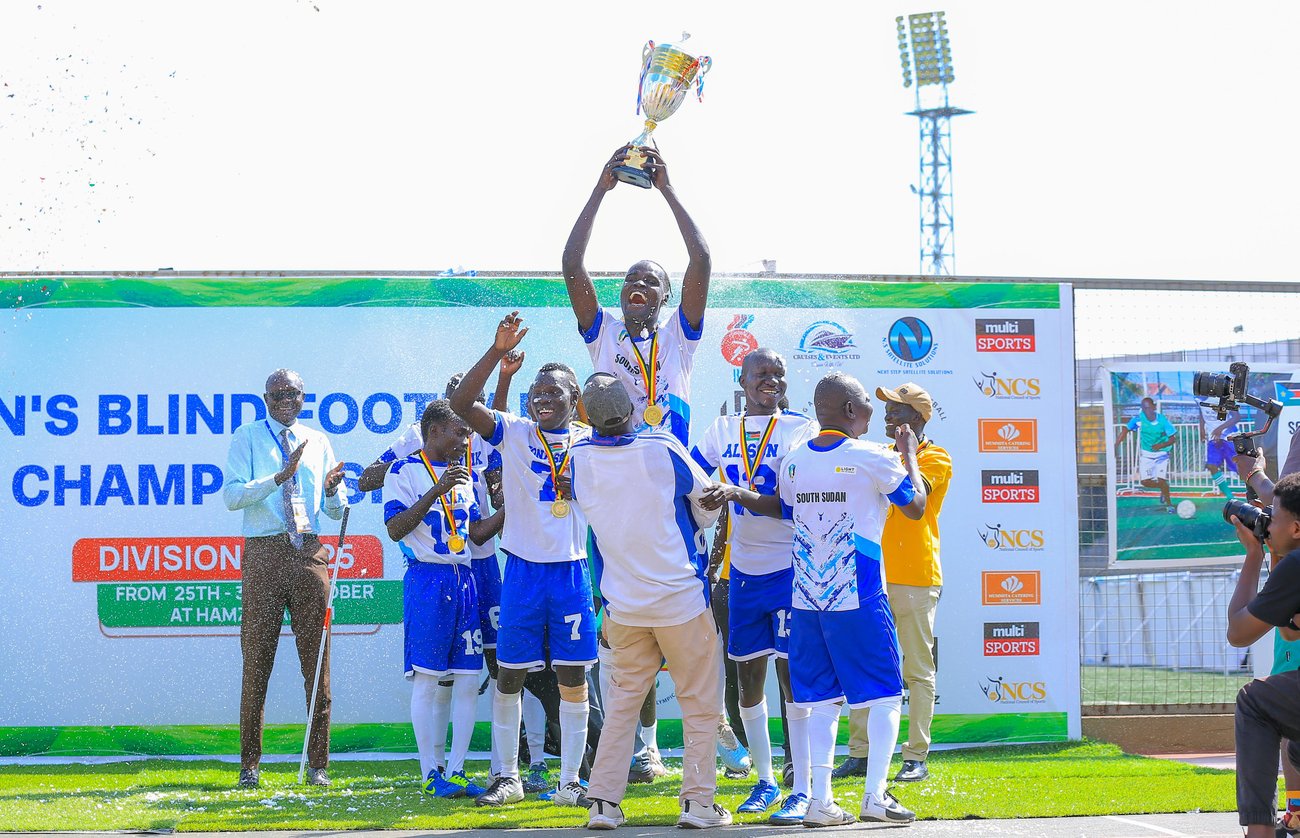
The rise and rise of South Sudan’s blind footballers |
|
|
|
|
|
Your updates and feedback
|
|
Please help us to improve and enrich this newsletter by completing this short form.
If you have resources and information to share for the next edition, please post them here. |
|
|
|
|